
Quick Answer
Importing bubble tea ingredients from Taiwan into Southeast Asia is manageable once you know who regulates food in each country. In Vietnam, a food product is normally declared to the authorities before sale and must carry a Vietnamese label. In Thailand, the importer must hold a Thai FDA food import licence, and the label must be in Thai. In Malaysia, import approval is given by Ministry of Health officers at the point of entry, and an imported label must be in Bahasa Malaysia or English. Rules change often, so confirm every detail with your local importer or customs broker before you ship.
Country at a Glance
| Country | Main authority | Key requirement | Sources |
|---|---|---|---|
| Vietnam | Ministry of Health (food safety); Customs at the border | Product self-declaration under Decree 15/2018/ND-CP (still applied while Decree 46/2026/ND-CP is suspended); Vietnamese label under Decree 43/2017/ND-CP as amended | [1], [2], [3] |
| Thailand | Food and Drug Administration (Thai FDA), Ministry of Public Health | Food import licence under Section 15 of the Food Act B.E. 2522; Thai-language label under Notification No. 450 B.E. 2567 | [4], [5], [6] |
| Malaysia | Ministry of Health, Food Safety and Quality Programme (PKKM); MAQIS for some products | Importer and broker registered in the FoSIM system; label in Bahasa Malaysia or English with importer details | [7], [8], [9] |
Vietnam
Product declaration. Under Decree 15/2018/ND-CP, food producers and traders must self-declare pre-packaged processed foods, food additives and processing aids before putting them on the market. Products imported only to make goods for export, or for internal production and not sold domestically, are exempt (Article 4) [1]. The dossier includes the declaration form (Form No. 01) and a food safety test result issued within the previous 12 months by a designated laboratory or one accredited to ISO 17025 (Article 5). Documents must be in Vietnamese, with notarised translations of foreign-language papers, and trading may begin right after the declaration is made [1]. Dietary supplements, foods for special dietary uses and foods for children up to 36 months need registration rather than self-declaration (Article 6) [1].
Current legal status. Decree 46/2026/ND-CP, issued in January 2026, was designed to replace Decree 15/2018 [11]. Resolution 15/2026/NQ-CP of 6 April 2026 suspends it until the amended Law on Food Safety takes effect, and during that time Decree 15/2018 and its guidance continue to apply [3]. This area is moving quickly, so ask your Vietnamese partner which procedure applies on the day you ship.
Labels. Compulsory label content for goods circulated in Vietnam must be in Vietnamese. The label must show the name of the goods, the name and address of the responsible organisation (for imports, the manufacturer and the importer) and the origin. If the original label lacks any of this, the importer adds a Vietnamese label after customs clearance and before the goods are sold (Decree 43/2017/ND-CP as amended by Decree 111/2021/ND-CP; the English text is an unofficial translation) [2].
Customs inspection. Decree 15/2018 sets reduced, normal and tightened inspection methods for imported food. Under the reduced method, document checks cover up to 5% of lots; tightened inspection adds sampling and testing (Articles 16 to 19) [1].
Halal. None of the official or legal sources reviewed made halal certification a general requirement for imported food in Vietnam. Buyers who target Muslim customers should ask their importer.
Common pitfalls. Foreign-only labels with no Vietnamese label ready; test reports older than 12 months; paperwork that has not been translated and notarised; and assuming that the January 2026 decree already applies.
Thailand
Import licence. Section 15 of the Food Act B.E. 2522 (1979) states that nobody may import food for sale without a licence from the authority. The importer must be a person or juristic person with a commercial registration certificate and a place of business in Thailand, and the import and storage premises must meet Thai FDA criteria. Applications go through the Thai FDA e-Submission System, and the licence is issued as Form Orr. 7 [4]. In practice, a foreign exporter therefore sells to a licensed Thai importer.
Product registration. The Thai FDA sorts food into four categories: specifically controlled food, food with quality or standard requirements, food with labelling requirements, and general food [5]. Products in the first three categories, and general food that applies for one, receive a food serial number once licensed. Some general foods, including sugar, flour products, seasonings and condiments, can be imported without a serial number but must be recorded in the Virtual Number System. For each shipment, the importer verifies the product certificate number starting with “U1” and registers a License per Invoice account with the Customs Department’s National Single Window [4]. The Thai FDA also requires product quality documents and a manufacturing-standard certificate at least equivalent to GMP 420 for foods [4]. Which route a particular bubble tea ingredient follows depends on its category, so ask the Thai importer to confirm it with the Thai FDA.
Labels. Notification No. 450 B.E. 2567 (2024) governs pre-packaged food labelling. It took effect on 19 July 2024, repealed Notifications No. 367, 383, 401 and 410, and has been amended since. Labels must be in Thai and may also show English. Required items include the food name, the food serial number, the importer’s name and address (marked “Importer” or “Imported by”) with the manufacturer’s name and country, net content in metric units, allergen statements and date marking [6]. Labels produced under the old rules could be used until 18 July 2026, so current stock must follow Notification 450 [6].
Halal. The Thai FDA importation page reviewed does not mention halal requirements [4].
Common pitfalls. Selling to a buyer without an import licence; shipping before the serial number or Virtual Number record exists; leaving the serial number off the Thai label; and using pre-2024 label designs.
Malaysia
Authority and approval. Food imports are controlled under the Food Act 1983 and Food Regulations 1985 by the Ministry of Health Malaysia’s Food Safety and Quality Programme (PKKM). The ministry states that food imports under the Act generally do not need an import permit; import approval is given by an authorised Ministry officer at the point of entry through the Food Safety Information System of Malaysia (FoSIM) [7]. Importers and customs brokers must register in FoSIM [8].
Inspection tiers. Consignments are routed into one of six categories, from automatic release through document checks and sampling to hold-test-release and automatic rejection. Depending on the product, a health certificate, Certificate of Analysis (CoA) or licence may be requested, and some foods also need permits from other agencies such as MAQIS [8]. Non-compliant food can be rejected, re-exported, relabelled, destroyed or prosecuted [7].
Labels. The Ministry of Health’s Guideline on Labelling Requirements (2023) says that imported food must be labelled in either Bahasa Malaysia or English, and a translation into another language is optional. An imported label must show the overseas manufacturer (or the rights owner or agent), the name and business address of the importer in Malaysia, and the country of origin [9]. The ministry also operates a label checking service through FoSIM [7].
Halal. Under the Trade Descriptions (Certification and Marking of Halal) Order 2011, imported food cannot be marketed as halal unless it meets the Order’s requirements or is certified by a foreign halal certification body recognised by JAKIM, as stated by JAKIM’s Halal Council Secretariat in 2022 [10]. The sources reviewed do not say that food making no halal claim must be certified. The list of recognised bodies changes, so check the JAKIM portal.
Common pitfalls. Importer or broker not registered in FoSIM; labels without a Malaysian importer address; a halal logo or claim from a body JAKIM does not recognise; and missing health certificates or CoAs where the product category calls for them.
Documents That Apply in All Three Markets
- Commercial invoice, packing list and bill of lading or air waybill, with product names and weights matching each other and the label.
- Certificate of Analysis (CoA), when the importer or authority requests it. Vietnam’s declaration needs a recent test result, and Malaysia may request a CoA depending on the product [1], [8].
- Certificate of origin, where the buyer needs it for customs purposes. Check duty and HS classification with your broker.
- Factory quality certificates such as HACCP or GMP evidence. Thailand asks for a GMP-equivalent manufacturing certificate [4].
- Halal certificate, when the product will be sold as halal in Malaysia [10].
Batch traceability. Ask your supplier to print a batch or lot number on every carton and to record it on the CoA and shipping documents. If a customs officer, laboratory or customer raises a question, you can then trace the product to its production run.
FCL and LCL. A full container load (FCL) is one shipper’s goods in one container. A less-than-container load (LCL) shares a container with other shippers’ cargo and is consolidated and deconsolidated at ports. Each separate product still needs its own labels and paperwork, and sampling or holds on one lot can delay the whole consignment. Ask your forwarder how LCL cargo is released.
Products in this article
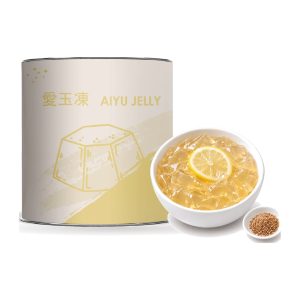
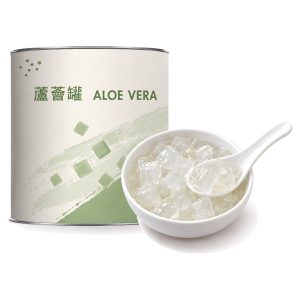
All 492 Bubble Tea & Boba Ingredients →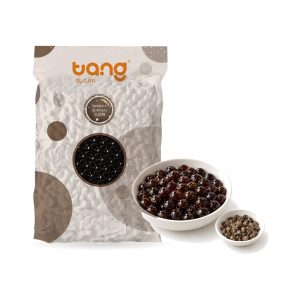
FAQ
Do I need a licence to import bubble tea ingredients into Thailand?
Yes. The importer must hold a Thai FDA food import licence under Section 15 of the Food Act B.E. 2522. A foreign exporter normally sells to a licensed Thai importer [4].
Does Malaysia require an import permit for food?
Generally no. The Ministry of Health states that food imports under the Food Act 1983 do not usually need an import permit, because approval is given at the point of entry through FoSIM. Some foods need permits from other agencies, so check by product [7], [8].
Do I need a Vietnamese label?
Yes. Compulsory label content for goods circulated in Vietnam must be in Vietnamese. If the original label lacks it, the importer adds a Vietnamese label before sale [2].
Is Decree 46/2026 in force in Vietnam?
It is suspended. Resolution 15/2026/NQ-CP of 6 April 2026 suspends it until the amended Law on Food Safety takes effect, and Decree 15/2018 continues to apply meanwhile [3]. Check again before you ship.
Can I use an English-only label in Southeast Asia?
In Malaysia, imported food may carry Bahasa Malaysia or English [9]. In Thailand, labels must be in Thai and may also show English [6]. In Vietnam, an English-only label needs a Vietnamese label added [2].
Is halal certification mandatory?
Not as a general rule in the sources reviewed. In Malaysia, a halal claim on imported food needs certification that JAKIM recognises [10]. Buyers selling to Muslim customers in any country should confirm requirements with their importer.
When should I ask for a Certificate of Analysis?
Ask when your importer, laboratory or authority wants one. Vietnam’s declaration needs a recent test result, and Malaysia may request a CoA depending on the product [1], [8].
Who is responsible for compliance?
The importer, in all three markets: the Vietnamese label names the importer, the Thai licence belongs to the importer, and Malaysia registers the importer in FoSIM. Work with a local importer or customs broker [2], [4], [8].
How Tang Sugar Can Help
Tang Sugar is operated by Caitang International Co., a Taiwan trading company established in Taichung in June 2019. We have exported to more than 50 countries. We can quote several items on one quotation and ship by FCL or LCL. We also support OEM/ODM projects and private-label products. Our partner factories hold HACCP, ISO 22000, FSSC 22000 and Halal certification, with certificates available on request, and we can provide a CoA when needed. This guide is general information, not legal advice. Your local importer remains responsible for registration and labelling in your country.
Sources
All pages were opened on 2026-10-29.
1. Decree No. 15/2018/ND-CP (English translation), LuatVietnam: https://english.luatvietnam.vn/decree-no-15-2018-nd-cp-dated-february-02-2018-of-the-government-on-elaboration-of-some-articles-of-the-law-on-food-safety-159173-Doc1.html
2. Decree No. 111/2021/ND-CP amending Decree No. 43/2017/ND-CP on goods labelling (English translation, unofficial), LuatVietnam: https://english.luatvietnam.vn/decree-no-111-2021-nd-cp-dated-december-09-2021-of-the-government-amending-and-supplementing-a-number-of-articles-of-the-governments-decree-no-43-213912-Doc1.html
3. Resolution No. 15/2026/NQ-CP of 6 April 2026, as reported by the Thai Nguyen Provincial Department of Justice (published 16 April 2026): https://pbgdplthainguyen.gov.vn/news/gioi-thieu-noi-dung-van-ban-phap-luat-moi/chinh-phu-tam-ngung-hieu-luc-nghi-dinh-46-2026-nd-cp-tiep-tuc-ap-dung-nghi-dinh-15-2018-nd-cp-trong-quan-ly-an-toan-thuc-pham-1722.html
4. Thai FDA, Food Importation: https://en.fda.moph.go.th/our-services-new/food-importation
5. Thai FDA, What is Food and How to Categorize Food: https://en.fda.moph.go.th/entrepreneurs-food/category/food-what-is-food-and-how-to-categorize-food
6. USDA Foreign Agricultural Service, Thailand: Labelling of Pre-Packaged Food Requirements, report TH2026-0018, 3 July 2026 (copy hosted by APEDA): https://agriexchange.apeda.gov.in/MarketReport/1039705082026724171352424.pdf
7. Ministry of Health Malaysia, Food Safety and Quality Programme, food import activities: https://hq.moh.gov.my/fsq/aktiviti-import-makanan
8. Ministry of Health Malaysia, procedure for importing food for commercial purposes: https://hq.moh.gov.my/fsq/prosedur-pengimportan-makanan
9. Ministry of Health Malaysia, Guideline on Labelling Requirement under the Food Act 1983 and Regulations (2023): https://hq.moh.gov.my/fsq/garis-panduan-pelabelan-makanan
10. Malay Mail, 12 June 2022, reporting JAKIM Halal Council Secretariat on the Trade Descriptions (Certification and Marking of Halal) Order 2011: https://www.malaymail.com/news/malaysia/2022/06/12/ap-abolishment-entry-of-halal-food-subject-to-trade-descriptions-says-jakim/11941
11. Vietnam Briefing, 4 February 2026 (secondary source, background on Decree 46/2026): https://www.vietnam-briefing.com/news/vietnam-addresses-implementation-bottlenecks-under-decree-46-on-food-safety.html/

