
Quick Answer
To import bubble tea ingredients such as tapioca pearls into Japan for sale or business use, you must (1) file an import notification under Article 27 of the Food Sanitation Act with the MHLW quarantine station at the port of entry, (2) have Japanese-language food labelling on the packaging, including the importer’s name and address, and (3) clear the goods through Japan Customs with the standard commercial documents. The importer of record must have an address in Japan, because non-residents cannot file the notification. Rules change, so confirm details with your customs broker or the quarantine station before the first shipment.
This guide is general information, not legal or customs advice. Check current requirements with the quarantine station and a licensed customs broker.
What You Need Before Importing
| Requirement | What it means | Official source |
|---|---|---|
| Import notification | Filed for each shipment of food for sale or business use, at the quarantine station covering the port | MHLW, Import Notification Procedures |
| Importer with a Japanese address | Non-residents without an address or residence in Japan cannot file | Osaka Quarantine Station |
| Ingredient and process statement | For processed foods, a statement on ingredients and manufacturing process; test reports or health certificates where needed | MHLW, Food Import Procedures |
| Compliant additives | Basically only designated additives (plus existing additives, natural flavourings and ordinary foods used as additives) | Consumer Affairs Agency |
| Japanese food labelling | Mandatory items in Japanese on containers and packaging | Consumer Affairs Agency |
| Customs declaration and duty | Invoice, bill of lading, packing list and other documents; duty per the tariff schedule | Japan Customs |
1. Import Notification under the Food Sanitation Act
Article 27 of the Food Sanitation Act requires importers of food, food additives, apparatus and containers or packaging for sale or business use to notify the Minister of Health, Labour and Welfare “on each occasion”, so every shipment needs its own notification. Goods imported without notification cannot be used for sale or business purposes. MHLW
How to file. You submit the “Notification Form for Importation of Foods, etc.” to the quarantine station responsible for the port of import, on paper or electronically. Electronic filing requires prior registration with the MHLW. MHLW The form exists in Japanese and English, and the quarantine station accepts filings from seven days before the scheduled arrival of the cargo. Seals and signatures are no longer required. MHLW
Who can file. The Osaka Quarantine Station states that non-residents without an address or residence in Japan cannot file, so a Japanese importer of record is needed. Osaka Quarantine Station
What the quarantine station reviews. A food sanitation inspector examines the export country, product, manufacturer and manufacturing site, ingredients, manufacturing method and additive use. The checks include compliance with manufacturing standards, additive standards, the presence of harmful substances and any past sanitation problems at the manufacturer. If the notification passes, a Certificate of Notification is returned and import continues. If it does not pass, the cargo cannot be imported. MHLW
First-time imports of processed foods. Processed foods need a statement on ingredients and manufacturing process. Health certificates (for items such as meat) and test reports (for items with specific standards) are required where applicable. MHLW Documents in English need no translation, while other languages must be translated into Japanese by the importer. Manufacturer names and addresses are entered in Roman letters. Products whose ingredients cannot be identified cannot be imported. Osaka Quarantine Station In practice, ask your supplier for a full ingredient list and process flow before the first order.
Inspections. Cargo may be sent for inspection after document review. The MHLW lists inspection orders (Article 26) for higher-risk imports and monitoring inspections (Article 28) as part of an annual plan; violations can trigger tighter checks. MHLW For continuing imports, a test report submitted at the first import may allow guidance inspection of that item to be omitted for a period, except for items that can change in transit such as bacteria and mycotoxins. MHLW
2. Additives and Standards
The Consumer Affairs Agency (CAA) states that “basically, only food additives designated based on the Act are permitted for use in Japan”. Three other categories are also usable: existing food additives, natural flavouring agents, and ordinary foods used as additives. Responsibility for additive standards moved from the MHLW to the CAA on 1 April 2024. CAA
For bubble tea ingredients, this means the colours, preservatives, thickeners and flavourings in a product must be allowed in Japan, not merely in Taiwan. Ask your supplier for the full additive list and check it against Japanese rules with your importer or the quarantine station. We did not verify specific additive limits for individual products, so none are stated here.
3. Food Labelling Act: Japanese Labels
The CAA states that food sold in Japan must carry food labelling in Japanese on its containers and packaging, and that non-compliant products violate the Food Labelling Act and may not be sold in Japan. Its example list for an imported seasoning comprises: CAA
- generic name of the food
- ingredients
- allergen information
- additives
- net weight
- expiration date (use-by or best-before)
- storage method
- country of origin
- importer’s name and address
- nutrition information
The CAA adds that further labelling may be required depending on the product. Its general pamphlet also states that allergen labelling is mandatory for eight items and recommended for 20 others, and that energy, protein, fat, carbohydrates and salt equivalent must be shown in the nutrition information. CAA
For imported processed foods, the “country of origin” shown is the country from which the product was imported; listing the origin of ingredients is not mandatory. CAA Have your Japanese importer or a labelling specialist check the final label text, since errors cannot be fixed after goods are on sale.
Cups, lids and straws may also fall under Japan’s rules for food apparatus, containers and packaging. Ask your Japanese importer to confirm what applies to your products before you order.
4. Documents
For customs clearance, Japan Customs states that the import declaration must be accompanied by the invoice, the bill of lading or sea waybill (air waybill for air cargo), the insurance certificate, the freight account, the packing list, contracts and price lists. Other laws’ permits may be needed, and a certificate of origin is needed where a preferential rate applies. Japan Customs Customs may ask for further documents. Declarations are normally made by the importer or a customs broker acting for them, generally after the goods have entered a bonded area, and a pre-arrival examination system allows documents to be submitted before the cargo arrives. Japan Customs
For the quarantine station, prepare the notification form plus the ingredient and manufacturing process statement, and test reports or certificates where required (see section 1).
5. Customs Duty
Duty depends on the exact product, so ask your broker to classify it before ordering. As an example, the Japan Customs tariff schedule (edition of 8 August 2026) lists heading 1903.00.000, “tapioca and substitutes prepared from starch”, with a General rate of 16% and a WTO rate of 9.6%. Japan Customs Japan Customs explains that the applied rate is the lower of the WTO rate and the General (or Temporary) rate, and that EPA or preferential rates apply only to goods originating in the partner countries. Japan Customs We did not find an official source confirming a preferential rate specific to Taiwan-origin goods, so confirm the rate that applies to your product and origin with Japan Customs or your broker. Other products, such as syrups, powders and toppings, may fall under different headings.
Products in this article
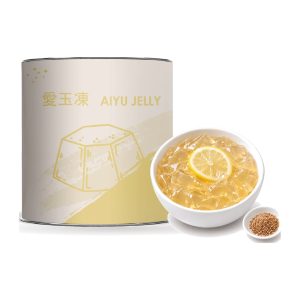
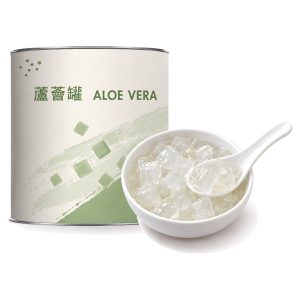
All 492 Bubble Tea & Boba Ingredients →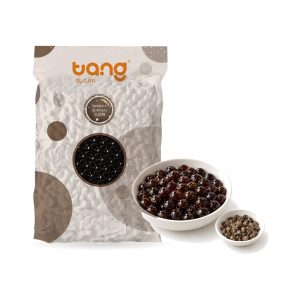
FAQ
Do I need to notify every shipment?
Yes. Article 27 requires notification “on each occasion”, so each import needs its own notification. MHLW
Can a Taiwanese exporter file the notification?
No. A non-resident without an address or residence in Japan cannot file, so a Japan-based importer must do so. Osaka Quarantine Station
How early can I file?
From seven days before the scheduled arrival of the cargo. MHLW
Can I sell products with English-only labels?
No. Mandatory information must appear in Japanese on the packaging. CAA
Do I need a certificate of origin?
Customs lists it for goods where a preferential rate is claimed. Japan Customs Ask your broker whether it applies to your goods.
Will my goods be tested?
Possibly. Cargo may be inspected after document review, and certain products are subject to inspection orders or monitoring. MHLW
Can an ingredient that Taiwan allows be refused in Japan?
Yes. The quarantine station checks additive use against Japanese standards, and an unapproved additive can lead to refusal. MHLW
Who can advise before I import?
A Japanese customs broker or your Japanese importer, who can check your products against the Food Sanitation Act before the first shipment.
How Tang Sugar Can Help
Tang Sugar is a Taiwanese trading company based in Taichung (founded in June 2019) that has exported to more than 50 countries. We quote multiple products on a single quotation and ship full container loads (FCL) or less than container loads (LCL). We also support OEM/ODM projects and private labels. Our partner factories hold HACCP, ISO 22000, FSSC 22000 and Halal certification, and certificates are available on request. A certificate of analysis (COA) can be provided on request. Your Japanese importer remains responsible for the notification, labelling and customs steps above. We can supply the supplier-side information they ask for.
Sources
Pages checked on 2026-10-29.
- MHLW, Imported Foods Inspection Services: https://www.mhlw.go.jp/english/topics/importedfoods/index.html
- MHLW, Import Notification Procedures: https://www.mhlw.go.jp/stf/seisakunitsuite/bunya/kenkou_iryou/shokuhin/yunyu_kanshi/kanshi/index_00004.html
- MHLW, Food Import Procedures (Japanese): https://www.mhlw.go.jp/stf/seisakunitsuite/bunya/0000144562.html
- Osaka Quarantine Station, first-time importers (Japanese): https://www.forth.go.jp/keneki/osaka/syokuhin-kanshi/hajimete.html
- CAA, Food Additives: https://www.caa.go.jp/en/policy/standards_evaluation/food_additives_en
- CAA, labelling pamphlet for sellers of food in Japan: https://www.caa.go.jp/policies/policy/food_labeling/information/pamphlets/assets/food_labeling_cms203_260511_01.pdf
- CAA, Food Labeling Act pamphlet: https://www.caa.go.jp/en/about_us/booklet/assets/pamphlet_en_2026_0010.pdf
- CAA, country of origin labelling Q&A: https://www.caa.go.jp/en/policy/food_labeling/pdf/syokuhin_en_010.pdf
- Japan Customs, documents for import clearance: https://www.customs.go.jp/english/c-answer_e/imtsukan/1107_e.htm
- Japan Customs, outline of import clearance: https://www.customs.go.jp/english/c-answer_e/imtsukan/1101_e.htm
- Japan Customs, tariff schedule chapter 19 (8 August 2026 edition): https://www.customs.go.jp/english/tariff/2026_08_08/data/e_19.htm
- Japan Customs, outline of tariff and duty rates: https://www.customs.go.jp/english/summary/tariff.htm

