
Quick Answer
To import bubble tea ingredients such as tapioca pearls, syrups or tea powders into Australia for sale, you must (1) check the product’s biosecurity import conditions in the Department of Agriculture, Fisheries and Forestry’s BICON system, (2) make sure the food is safe and complies with the Australia New Zealand Food Standards Code and the Country of Origin Food Labelling Information Standard, and (3) lodge a Full Import Declaration so the consignment can be assessed under the Imported Food Inspection Scheme. Biosecurity requirements must be met first. Conditions differ by product, so always check the exact item.
General information only, not legal or customs advice.
What You Need Before Importing
| Requirement | What it means | Official source |
|---|---|---|
| Biosecurity import conditions | Check BICON to see whether the product is permitted, what conditions apply, and whether an import permit is needed. | DAFF, BICON |
| Imported food safety requirements | Food intended for sale must be safe and meet Australian food standards; BICON now also lists food safety requirements. | DAFF, Importing food into Australia |
| Food Standards Code compliance | Ingredients, additives, allergen declarations and labels must comply with the Code. | FSANZ; DAFF step-by-step guide |
| Country of origin labelling | Imported food for retail sale generally needs a country of origin statement. | FSANZ; business.gov.au |
| Full Import Declaration | Details of every food shipment are lodged through the Department of Home Affairs’ Integrated Cargo System, usually by a customs broker. | DAFF, Lodging declarations |
| Records | Keep supplier details, food descriptions, batch or lot identification, transaction dates and quantities. | DAFF step-by-step guide |
| GST on importation | GST is 10% of the value of the taxable importation, collected by Home Affairs. | Australian Taxation Office |
Step 1: Biosecurity (BICON) Comes First
The Department of Agriculture, Fisheries and Forestry (DAFF) says some products are only allowed into Australia if they meet import conditions, which may include a biosecurity import permit. The Biosecurity Import Conditions system (BICON) shows whether a commodity is permitted, whether conditions apply, and what you must do before the goods arrive. DAFF, BICON
DAFF states that all food imports must meet biosecurity import conditions first, and that all biosecurity requirements must be met before Imported Food Inspection Scheme requirements apply. DAFF, Importing food
Many bubble tea ingredients come from plant sources such as cassava starch, tea leaves, fruit and cereal. DAFF groups food import requirements into categories that include cereal grains and products, fruit and vegetables, herbs and spices, nuts and seeds, processed foods, and “all other food and beverages”. Which category and case applies to your product is something to confirm in BICON, by searching the goods description or tariff code. DAFF, Import requirements by food type
We have not assumed a permit is or is not required for any specific ingredient. Check each item in BICON before you order.
Step 2: Food Safety Import Control
The Imported Food Control Act 1992 provides for DAFF to operate the Imported Food Inspection Scheme (IFIS). DAFF, Importing food Under IFIS, food is classified as:
- Risk food: food listed in the Imported Food Control Order 2019 on FSANZ advice that it poses a medium or high public health risk. All consignments are referred for inspection, starting at a 100% rate. The rate falls to 25% after five consecutive passes, then to 5% after a further 20 consecutive passes, and returns to 100% if a consignment fails.
- Surveillance food: food that is not risk food or compliance agreement food. About 5% of consignments are referred at random. If one fails, a holding order is applied and future consignments are referred at 100% until a compliance history is built, normally after five consecutive passes.
- Compliance agreement food: food imported under a Food Import Compliance Agreement (FICA), managed under the importer’s own documented food safety system and not referred for inspection.
Source for the three classes: DAFF, Imported Food Inspection Scheme
Every inspected consignment gets a visual and label assessment, and samples may be taken for analytical tests depending on the food. A Food Control Certificate notifies you that the food will be inspected. If food fails, it cannot be released; you must relabel it (if the problem is labelling) or destroy or re-export it under supervision. Inspections are cost-recovered. DAFF, step-by-step guide
If you import for sale, you are legally responsible for taking steps to assure yourself the food is safe and meets Australian requirements. DAFF suggests seeking supplier assurances that the food was made under an effective food safety system, uses only permitted ingredients and additives, meets residue, microbiological and contaminant limits, and is correctly labelled including mandatory allergens. DAFF, step-by-step guide
Step 3: Food Standards Code, Labelling and Allergens
FSANZ states that all food sold in Australia and New Zealand must comply with the Australia New Zealand Food Standards Code. FSANZ
Allergens. Under Standard 1.2.3 and Schedule 9, allergens must be declared using the required names, for example milk, soy, wheat, peanut, sesame, egg, and sulphites at 10 mg/kg or more. Declarations go in the ingredient list in bold, plus a separate bold “Contains” summary statement beside it. Food packaged and labelled before 25 February 2024 that met the old rules could be sold until 25 February 2026. FSANZ, allergen labelling
Country of origin. Country of origin labelling is set by the Country of Origin Food Labelling Information Standard 2016 under the Competition and Consumer Act 2010, and became mandatory on 1 July 2018. FSANZ business.gov.au says the rules apply to imported food, that you can import products with the right labels or edit labels once in Australia, and that non-priority foods and most imported foods require a country of origin statement. business.gov.au
Additives and ingredients. Colours, flavours, sweeteners and thickeners must be permitted for use in Australia. Request full specifications from your supplier and compare them with the Code before ordering. Many recipes made for other markets differ.
Step 4: Documents
- Full Import Declaration (FID) in the Integrated Cargo System; customs brokers and importers complete it. DAFF, Lodging declarations
- Biosecurity or food safety documents that BICON specifies for your product, such as a government or food safety management certificate.
- Commercial paperwork such as the invoice, packing list and bill of lading. These are standard for customs entry. Your customs broker will confirm exactly what is required. We did not find an official page listing them for this product.
- Origin evidence. Whether a certificate of origin is needed depends on whether you claim any preferential duty rate. We have not verified any preferential rate for Taiwan; ask your customs broker.
Step 5: Duty and GST
Customs duty depends on the exact product and its tariff classification. We could not verify rates from an official source, so check the current Working Tariff of the Australian Border Force or ask a licensed customs broker. We make no claim about any Australia-Taiwan preferential rate.
GST on taxable importations is 10% of the value of the importation. That value is the customs value plus any customs duty, the cost of transport to the place of consignment in Australia, and insurance for that transport. GST is generally payable before release. GST-registered importers may claim a credit, and may be able to defer payment under the deferred GST scheme. The ATO notes that some goods, such as basic food, are not subject to GST on import because they would be GST-free if supplied in Australia, so whether a given product is taxable is worth confirming with a broker or the ATO. ATO
Products in this article
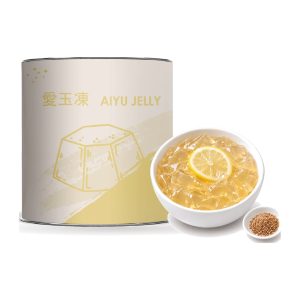
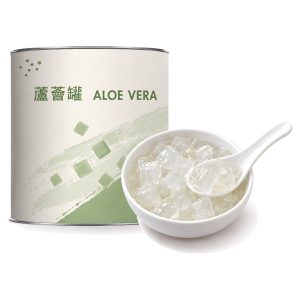
All 492 Bubble Tea & Boba Ingredients →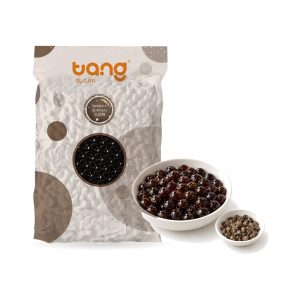
FAQ
Do I need an import permit to bring tapioca pearls into Australia?
It depends on the product and is confirmed in BICON, not assumed. BICON states whether a commodity is permitted, whether conditions apply, and whether a permit is required. Search by goods description or tariff code before you order.
Is bubble tea food “risk food” or “surveillance food”?
Risk food is the classification listed in the Imported Food Control Order 2019; everything else not under a compliance agreement is surveillance food. Check the relevant BICON food safety case for your product to see which applies.
What happens if my consignment is referred for inspection?
You receive a Food Control Certificate and the food is inspected, with a visual and label assessment and possibly laboratory tests. If tests apply, you nominate an appointed laboratory and pay for the analysis. Inspection fees are cost-recovered.
Can I relabel after arrival?
Business.gov.au says you can edit labels once products are in Australia to meet country of origin requirements. DAFF also lists relabelling as an option if food fails on labelling. Confirm the process with your broker.
Who is responsible for compliance, the supplier or the importer?
The importer. DAFF says importers have legal responsibilities to assure themselves the food is safe and meets Australian requirements. Supplier assurances help, but they do not transfer that responsibility.
Do I need to pay GST on imported food ingredients?
GST of 10% applies to most taxable importations, but the ATO notes basic food that would be GST-free in Australia is not taxed on import. Confirm treatment for your product with a broker.
Can I avoid border inspection?
Importers with a documented food safety management system can apply for a Food Import Compliance Agreement, regulated under an audit arrangement. DAFF, step-by-step guide
What records must I keep?
Supplier or customer contact details, food descriptions with batch or lot identification, transaction dates and quantities. DAFF, step-by-step guide
How Tang Sugar Can Help
Tang Sugar (Caitang International Co.) is a Taiwanese trading company founded in Taichung in June 2019 and has exported to more than 50 countries. We can quote multiple products on one quotation and ship as full container load (FCL) or less than container load (LCL). We also support OEM/ODM and private-label projects. Our partner factories hold HACCP, ISO 22000, FSSC 22000 and Halal certification; certificates are available on request, and a certificate of analysis (COA) can be provided when required. Please note we do not give customs or legal advice; confirm Australian requirements with BICON and a licensed customs broker.
Sources
All accessed 2026-10-29.
- DAFF, Importing food into Australia: https://www.agriculture.gov.au/biosecurity-trade/import/goods/food
- DAFF, step-by-step guide: https://www.agriculture.gov.au/biosecurity-trade/import/goods/food/how
- DAFF, Imported Food Inspection Scheme: https://www.agriculture.gov.au/biosecurity-trade/import/goods/food/inspection-testing/ifis
- DAFF, Import requirements by food type: https://www.agriculture.gov.au/biosecurity-trade/import/goods/food/type
- DAFF, Lodging declarations: https://www.agriculture.gov.au/biosecurity-trade/import/goods/food/lodge
- DAFF, BICON: https://www.agriculture.gov.au/biosecurity-trade/import/online-services/bicon
- FSANZ, Food Standards Code: https://www.foodstandards.gov.au/food-standards-code
- FSANZ, Allergen labelling: https://www.foodstandards.gov.au/business/labelling/allergen-labelling
- FSANZ, Country of origin labelling: https://www.foodstandards.gov.au/consumer/labelling/coo
- business.gov.au, Food labelling and imported food: https://business.gov.au/Products-and-services/Product-labelling/Food-labelling-and-imported-food
- Australian Taxation Office, GST and imported goods (last updated 13 May 2024): https://www.ato.gov.au/businesses-and-organisations/gst-excise-and-indirect-taxes/gst/in-detail/rules-for-specific-transactions/international-transactions/gst-and-imported-goods

